
Barnstable County Arrest Warrants Explained
An arrest warrant gives police the power to take a named person into custody and bring that person before a Barnstable County court. Probable cause backs it. That means facts a reasonable person would read as showing an offense happened and that this person is tied to it. Most cases begin as a criminal complaint in District Court. Serious felonies follow a different route. A grand jury indicts, and the Superior Court takes the case. A prosecutor may also tell the court the accused will not appear unless arrested. Either way, the issuing court keeps the file and controls what comes next.
Barnstable County Arrest Warrants Under Rule 6
Massachusetts Criminal Procedure Rule 6 says what a warrant must contain. It must identify the defendant. A description is fine if it points to the person with reasonable certainty. It must state the offense charged. It must command an arrest and bring the person before the court. The issuing official signs it. Chapter 276 handles the practical side, including who is responsible for service. So a warrant can run active in the state system while a Barnstable County public name search shows nothing. The Barnstable Law Library, inside the courthouse complex, offers free public databases for reading those rules directly.
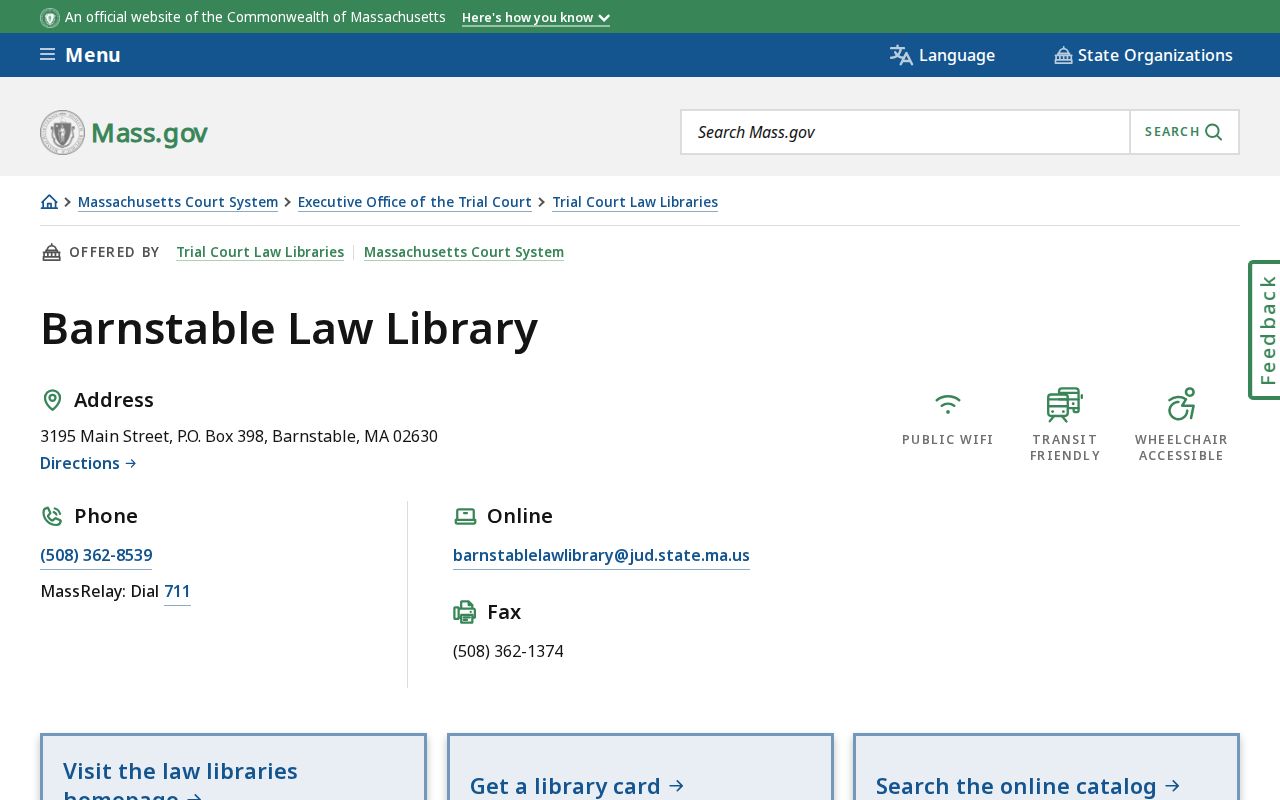
Library staff can help with legal research at the Barnstable County courthouse, though the library is not a warrant clearance counter.
Inside a Barnstable County Arrest Warrant
Two records, not one. The docket the public can read carries the case, while the state system behind a Barnstable County arrest warrant carries the identifiers.
| Case Number | The docket number, with the Division code in the middle of the string. |
|---|---|
| Charge | The substance of the complaint or indictment, with a statute and classification where the docket shows one. |
| Defendant | A name or a description identifying the person with reasonable certainty. |
| Issuing Court | The District Court Division or the Superior Court, and the official who signed. |
| Serving Agency | The police department entered as responsible for service, which is often a town department. |
| Bond or Release | Personal recognizance, cash bail, conditions, or a hold, when a court has set one. |
The state system behind a Barnstable County warrant holds more than the docket shows, including physical descriptors and aliases. That detail stays private.
Why Probable Cause Does Not Help a Barnstable Warrant Search
Probable cause is the standard a Barnstable County court applies before issuing process. The public cannot search it. It is no public finding about anyone either. The practical effect shows up in the gap between the systems a resident can reach. A criminal case may be searchable by exact case number. The warrant record, though, sits in a law-enforcement system no resident can query. With a sealed indictment, the public may see nothing at all until an arrest happens.
Serving Arrest Warrants in Barnstable County
The agency named in the state system handles service. For most Barnstable County cases, that is the town police department that investigated the matter. The Massachusetts State Police may be named instead. The Sheriff's Office is a correctional and civil-process authority, and its published warrant material covers civil capias service. It has no county criminal warrant unit for residents to call for status. After an arrest, the case moves to court quickly. When court is closed, a Barnstable County bail magistrate can release the person on personal recognizance or set cash bail until the next session. A judge then sets the conditions for the case.
Note: A bail magistrate can set release when court is closed, and a judge revisits the conditions at the next session.
Barnstable County Arrest Warrant Bonds and Release
Release conditions are set case by case. A judge or bail magistrate has real choices. They can release someone on personal recognizance, order cash bail in a stated amount, impose conditions, or hold the person without bail. Bail Rule 41 lists what a Barnstable County bail magistrate may accept out of court. Cash works. So do a bank check, a treasurer's or cashier's check, or a U.S. Government money order payable to the magistrate authorizing release. Barnstable County publishes no bond schedule and no bondsman list. The amount has to come from the court. A later failure to appear can forfeit cash bail or revoke a recognizance release, and posting bond only addresses custody, not the charge.
Comparing Arrest, Summons, and Bench Warrants
The three processes look similar on paper and behave very differently in practice.
| Process | What it does | Who acts first |
|---|---|---|
| Summons | Notifies a person to appear in court on a set date | The person, by appearing |
| Arrest warrant | Authorizes custody and production before the court on probable cause | Police, who serve it |
| Default or bench-style warrant | Responds to a missed court obligation | The clerk, who handles recall and a new date |
In Barnstable County, one docket can carry overlapping labels, so ask the clerk which status currently governs the case.
Barnstable County Search Warrants and Arrest Warrants
A search warrant works differently from an arrest warrant. It lets officers search a person, a place, a vehicle, or property for specific evidence. Under M.G.L. c. 276, §1, a court or justice issues one on a sworn complaint backed by probable cause. Later sections spell out the warrant's required form and the affidavit supporting it. Do not treat a search warrant as part of any public warrant lookup. Spotting one in Barnstable County records does not mean an active arrest warrant exists too. Many stay sealed while the investigation runs.
If There's an Arrest Warrant for You
Call the issuing court first. Then call a defense attorney in Barnstable County. Ask whether the court allows a scheduled appearance, whether counsel can file a recall request, whether a bond is already set, and where the person must appear. No walk-in surrender program is published here, so showing up unannounced at a police station is not a plan.
Important: Do not rely on a blank public search, and do not discuss the case with police before you have spoken with a lawyer.
The official bail process page describes the arrest-to-arraignment sequence and the bail magistrate's role.
Federal Arrest Warrants Beyond Barnstable County
A federal warrant is not a Barnstable County record. The county sits inside the U.S. District Court for the District of Massachusetts. There, a magistrate judge may issue an arrest warrant on probable cause, and the U.S. Marshals Service handles the fugitive work. You read federal dockets on PACER, not the state portal. That takes a registered account. Page fees apply, with a quarterly waiver threshold. Sealed complaints and unserved warrants may not appear at all, so a federal docket search never rules out sealed process. The PACER fee page lays out the per-page charge, the document cap, and the quarterly waiver.
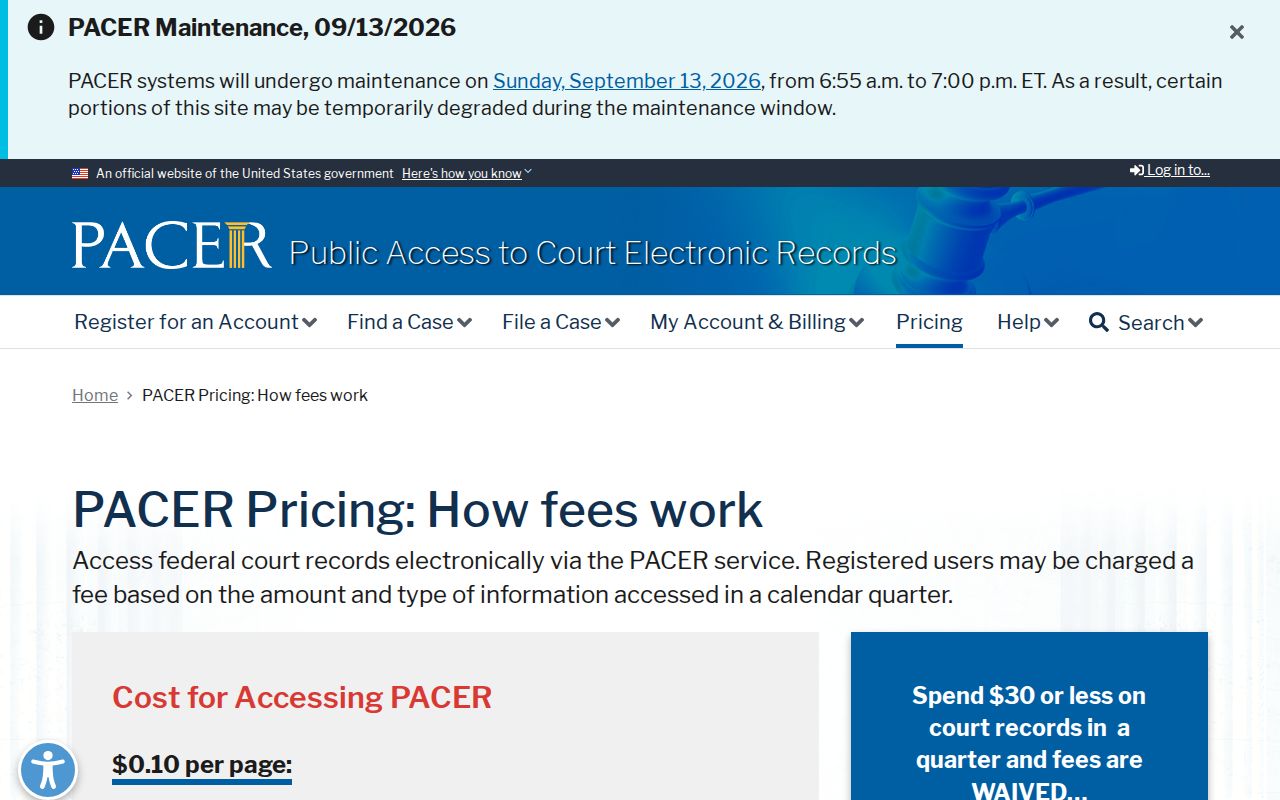
A federal arrest warrant never shows up in the docket system that covers Barnstable County, and searching it costs money.
Barnstable County Police and Court Service Routes
Federal records come with fees, and Barnstable County's state docket system will never show a federal warrant.
| Issuing court | Towns served | Court contact | Service note |
|---|---|---|---|
| Barnstable District Court | Barnstable, Yarmouth, Sandwich | (508) 375-6778 | Local police department named in the state system |
| Falmouth District Court | Bourne, Falmouth, Mashpee | (508) 495-1500 | Local police department named in the state system |
| Orleans District Court | Nine Lower and Outer Cape towns | (508) 255-4700 | Local police department named in the state system |
| Barnstable County Superior Court | Countywide indictments | (508) 375-6684 | Superior Court clerk keeps the case file |
Barnstable County police departments release their own reports through records offices. A police report, though, is not an official statement of warrant status.
Note: A police report describes an arrest, and only the court docket shows whether a warrant is still open.