
Barnstable County Bench Warrants Explained
A judge signs a bench warrant when a court obligation goes unmet. The trigger is usually a missed arraignment, a skipped pretrial conference or trial date, an unpaid fine or fee the court ordered, or some other order in the case the person ignored. Massachusetts treats the missed obligation itself as the offense. Under M.G.L. c. 276, §26, a summoned defendant who fails without reasonable cause to appear and abide by the court's orders is in contempt. A warrant may then issue. That is the paper a Barnstable County judge signs.
Barnstable County Default Warrants and Bench Warrants
The local courts rarely use the phrase bench warrant. On the docket, the event usually reads default. Clerks speak of a default warrant and default removal instead. Some notices say arrest warrant. Whatever the paper says, a recall is the order that withdraws it. Use the words on your notice when you call. If it says default warrant, say default warrant, because the clerk moves faster when your case number and the event match what is in the file. One more distinction matters in Barnstable County. The word capias here refers to civil process after a money judgment, so a capias hearing is not a criminal bench warrant hearing.
How Barnstable County Bench Warrants Are Issued
In a Barnstable County courtroom, the process starts with a default entry when the person does not appear. A judicial officer then authorizes the warrant. The clerk records the entry along with the police department responsible for service, and the state system passes that information to agencies that can act on it. An arrest warrant on probable cause works differently. A prosecutor requests it, or the court authorizes it on an indictment, because the accused may not show up unless arrested. In both situations, the clerk of the issuing court controls recall. Police can serve a warrant. They cannot withdraw it.
Note: A bench warrant stays with the issuing clerk, and only that office can withdraw it.
Barnstable County Jury-Duty Warrant Recall
Jury duty generates its own warrants, and the state offers a separate recall route. The Office of Jury Commissioner tells a delinquent juror to call the Clerk-Magistrate's office at the court that issued the warrant, or to appear there during regular court hours with proof if a disqualification applies. Published contact routes include the juror helpline at (800) 843-5879, the delinquent juror line at (877) 966-7469, an out-of-state line at (617) 338-6409, and dlqjuror@jud.state.ma.us. The same page warns that an unresolved warrant can bring arrest, professional-license suspension, and the loss of certain refunds or benefits. The jury-duty warrant instructions show clearly that this kind of Barnstable County warrant never appears on any public list.
Bench Warrants and Arrest Warrants Compared
Both warrant types authorize an arrest. They start in different places, and that difference decides which Barnstable County office you call first.
| Point | Default or bench-style warrant | Arrest warrant |
|---|---|---|
| How it starts | A missed court date or a failure to obey an order | Probable cause on a complaint or an indictment |
| Who authorizes it | The judge handling the case after the default | A District Court judge or the Superior Court on indictment |
| First call | The Clerk-Magistrate for that Division | The clerk plus a defense attorney, because bond may be set |
| Typical next step | Default removal, a recall request, and a new date | An arranged appearance, a recall request, or release on bail |
What to Bring to a Barnstable County Warrant Hearing
Ask the clerk what the court wants before you travel. The list differs by Division and by case in Barnstable County, but these items cover most requests.
- The warrant notice, summons, or citation with the docket number on it.
- Photo identification for the clerk's counter.
- Documents explaining the missed date, such as a medical record or a work obligation.
- Any information about medication or a disability the court should accommodate.
- A phone number where the court can reach you if the paperwork is not ready the same day.
Heading to a Barnstable County warrant hearing? Ask about an interpreter when you schedule, since early requests are easier to fill.
Resolving a Barnstable County Bench Warrant
Removal happens in the courtroom. The clerk of the issuing Barnstable County court is the starting point, and a judge is the decision maker.
- Identify the Division from the notice, or from the docket code inside the case number.
- Call the clerk and ask whether the process is a default warrant or an arrest warrant, and whether it is still outstanding.
- Ask whether counsel can arrange the appearance, and speak with a Massachusetts attorney before you appear.
- Appear as directed during regular court hours, and say that you are there to request default removal and warrant recall.
- Ask for written proof of the recall, and ask whether the change reached police and the Registry.
Careful: A warrant does not expire on its own, and a missed date does not go away because time passed or because the ticket was paid.
Barnstable County Warrant Recall Is Not Case Dismissal
Recall removes the arrest process. It does not decide the charge. It does not erase the docket. The case simply returns to a calendar with a new date, and the underlying matter still has to be resolved. Two related steps work differently. Sealing and expungement follow their own Massachusetts procedure in the originating court. And a recall caused by identity theft cannot be handled by telephone, because the state's guidance says the person must appear at the court and ask for the recall there.
Finding the Court That Issued the Warrant
The Division depends on your town, not on which courthouse is closest. Barnstable District Court serves Barnstable, Yarmouth, and Sandwich. Falmouth District Court covers Bourne, Falmouth, and Mashpee. Orleans District Court takes the Lower and Outer Cape towns of Barnstable County.
| Division | Towns served | Code | Court contact |
|---|---|---|---|
| Barnstable District Court | Barnstable, Yarmouth, Sandwich | 25 | (508) 375-6778 |
| Falmouth District Court | Bourne, Falmouth, Mashpee | 89 | (508) 495-1500 |
| Orleans District Court | Brewster, Chatham, Dennis, Eastham, Orleans, Harwich, Truro, Wellfleet, Provincetown | 26 | (508) 255-4700 |
The courthouse locator confirms addresses and hours before a visit.
Note: Confirm the courthouse address before traveling, because a bench warrant hearing is tied to one Division.
Barnstable County Probate and Juvenile Court Routes
Not every enforcement matter in Barnstable County is a District Court bench warrant. A child-support or custody issue goes to the Barnstable Probate and Family Court register at (508) 375-6710, and family records can be impounded. The Probate and Family Court page lists the register's office and the virtual registry.
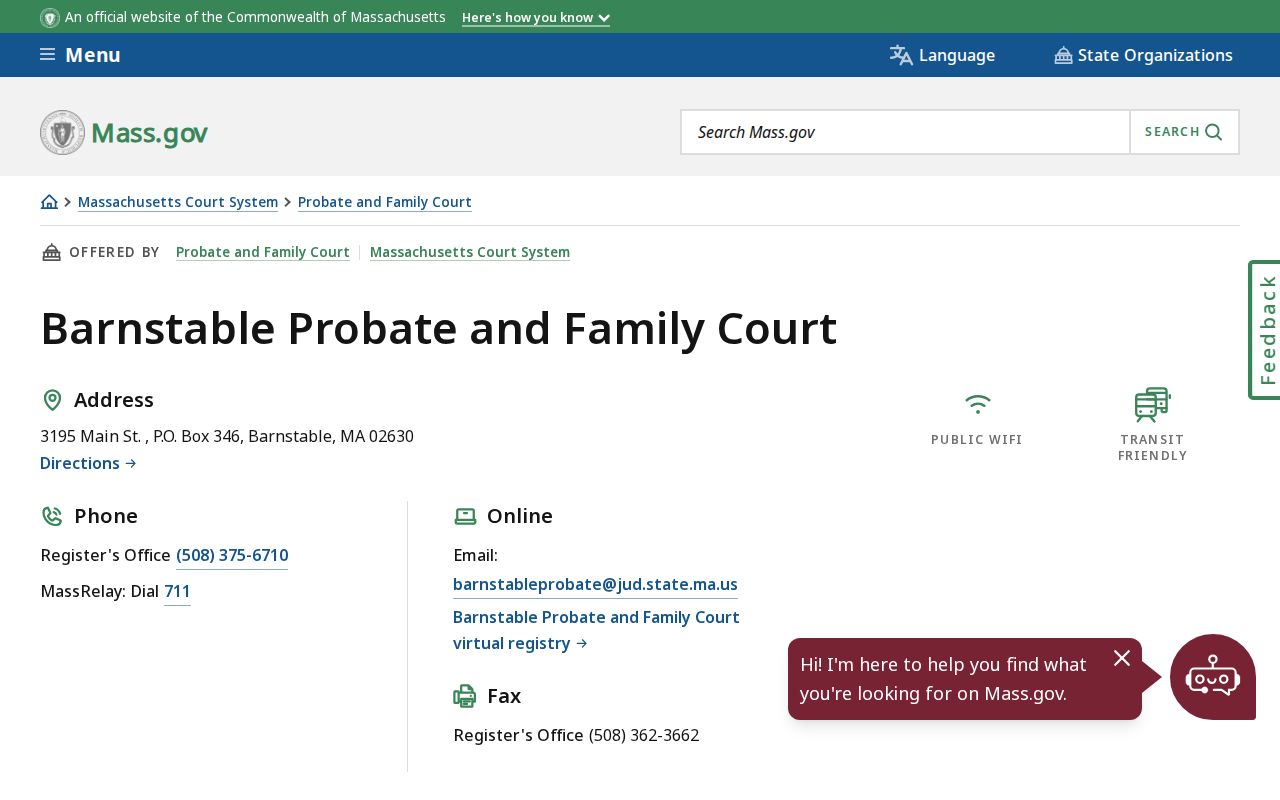
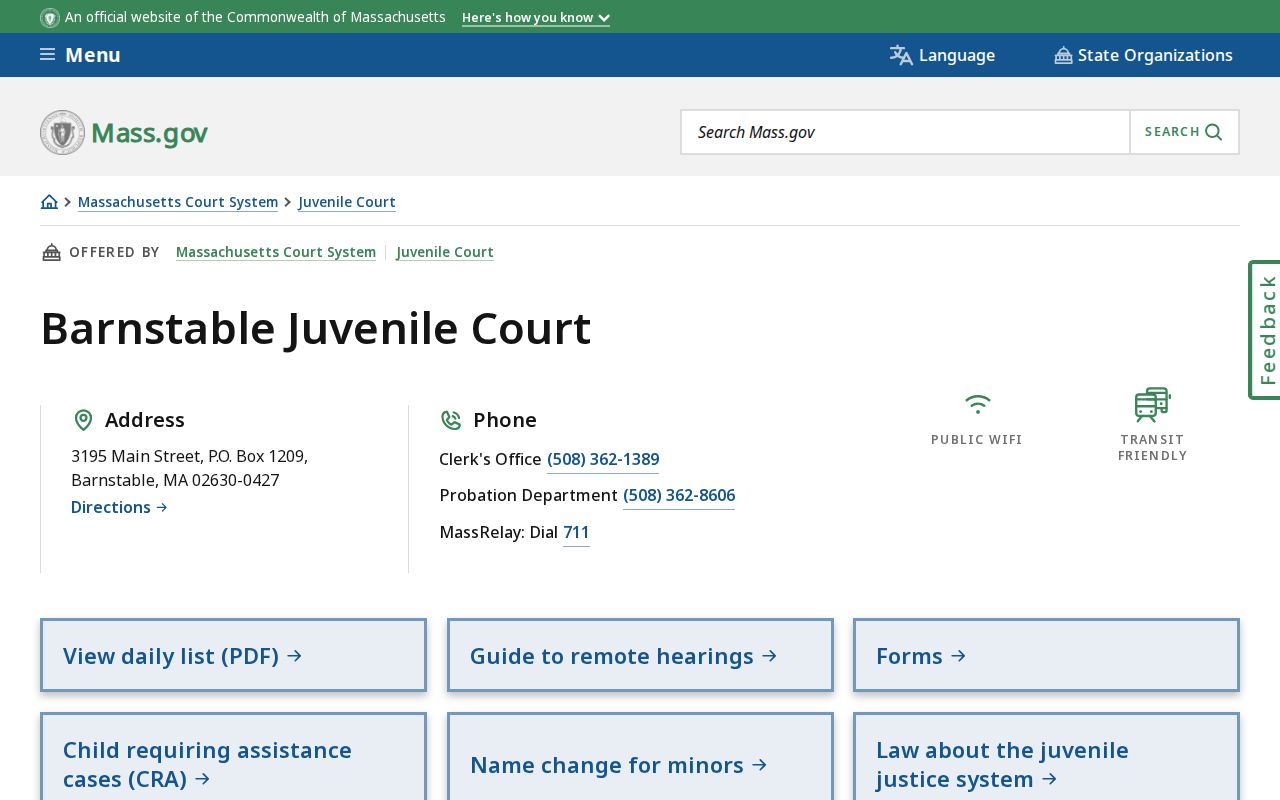
Family files can be impounded, so access often depends on the register's review. A juvenile matter goes to the Barnstable Juvenile Court clerk at (508) 362-1389. Delinquency records stay closed to public inspection under M.G.L. c. 119, §60A.
For a civil money judgment, the contact is the Sheriff's Civil Process Division at (508) 362-9578. That Barnstable County process is a capias, not a criminal bench warrant.
Barnstable County District Court Criminal Departments
Each Division publishes its own criminal contact, and the right extension saves a transfer.
| Court | Address | Criminal contact | Hours |
|---|---|---|---|
| Barnstable District Court | 3195 Main Street, Barnstable | (508) 375-6778 | Weekdays, 8:30 a.m. to 4:30 p.m. |
| Falmouth District Court | 161 Jones Road, Falmouth | Criminal extension 225; motor vehicle extension 287 | Weekdays, 8:30 a.m. to 4:30 p.m. |
| Orleans District Court | 237 Rock Harbor Road, Orleans | (508) 255-4700 | Weekdays, 8:30 a.m. to 4:30 p.m. |
| Barnstable County Superior Court | 3195 Main Street, Barnstable | Clerk of Courts, (508) 375-6684 | Weekdays, 8:30 a.m. to 4:30 p.m. |
Court pages list parking, public Wi-Fi, transit access, and an ADA contact. The Orleans District Court page covers the Outer Cape towns, where the drive to another Barnstable County Division is no shortcut.
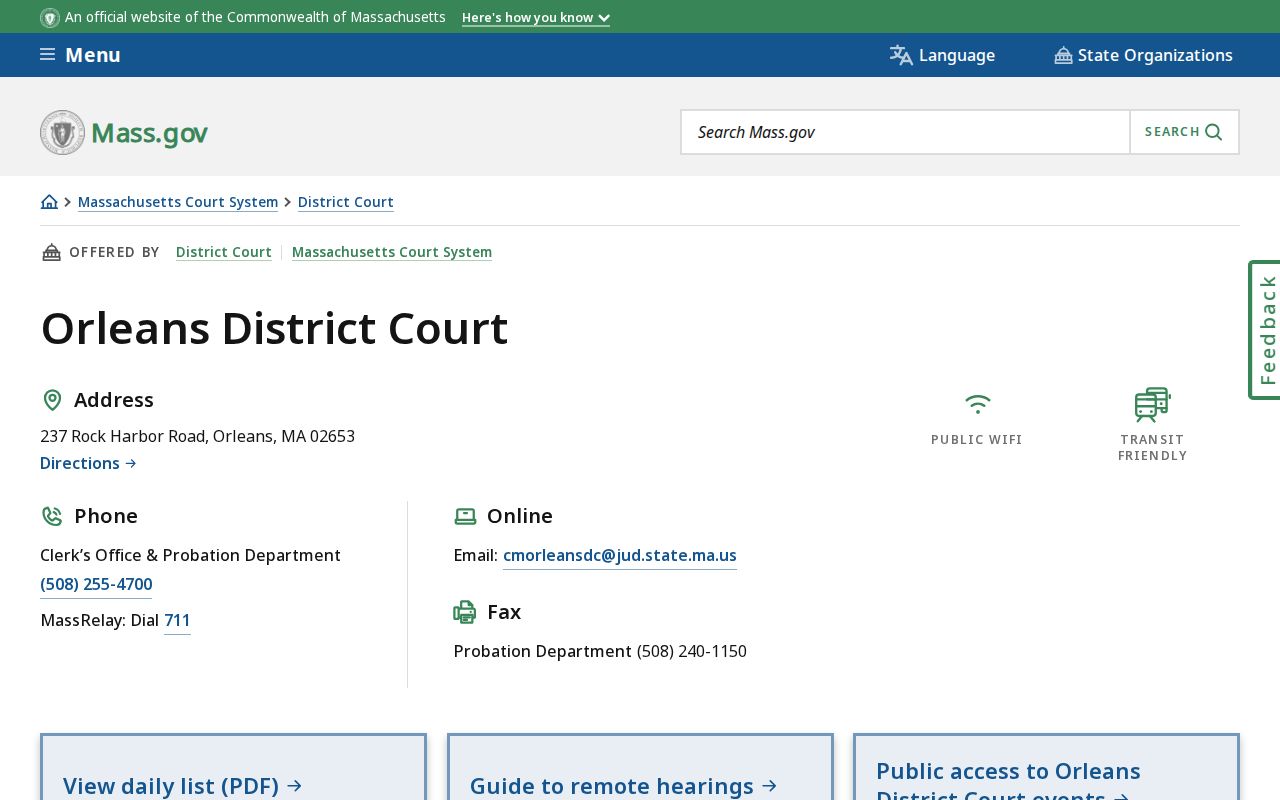
Details like these decide where a bench warrant gets heard. In Barnstable County, appearing at the wrong courthouse turns one missed date into two problems.