
Barnstable County's Most Wanted Program
A most wanted list is a marketing tool, basically. A law-enforcement agency picks a handful of cases and asks the public to help find those people. Some agencies run them well. Others skip them entirely, and Barnstable County has no such program on any of its official sites. The Sheriff's Office stays busy with public records requests and a civil process division instead. Its news items cover agency projects, not fugitives. So there is no tip line, no reward schedule, no eligibility rule, and no update cycle to describe, because the program itself does not exist here. Anyone hoping to check on a warrant should go to the court that issued it, not to a list that was never built.
No Verified Barnstable County Most Wanted Roster
Barnstable County posts no searchable roster of wanted people. The Sheriff's Office homepage, its public records page, its civil process page, and its news items carry none. The Trial Court's public pages and the police sites for Barnstable, Falmouth, Yarmouth, Sandwich, and Mashpee carry none either.
- No sheriff's most wanted page or warrant roster.
- No municipal list on any of the five town police sites.
- No tip line or reward program tied to a county warrant list.
- No update date, count, or program rules to compare against.
No names or photographs belong here, and Barnstable County publishes none to copy.
How the Most Wanted Lists Work
Where a program does run, expect a few standard parts: the sponsoring agency, rules for who makes the list, a tip channel, any reward terms, and a refresh schedule. Remember the list is a choice. An agency highlights certain cases, often the serious ones, and leaves the rest out. So a person missing from a most wanted page may still have an active warrant. A blank means nothing. A court docket works the other way, since it tracks one person and one case under the court's control rather than a publicity decision. If you want a real answer in Barnstable County, the docket beats the list every time. The list is not a warrant record. Keep that distinction in mind, because it shapes everything else about a warrant search in Barnstable County.
Barnstable County Warrant Records and Civil Process
The one warrant-related channel the Barnstable County Sheriff's Office publishes is civil. Its Civil Process Division works from 3261 Main Street in Barnstable and serves court papers county-wide, including a capias that follows an unpaid civil money judgment. Deputies would rather see a voluntary court appearance. A plaintiff who wants a physical arrest hands over the original capias plus a $300 retainer. This is a service workflow, not a fugitive roundup, and it says nothing about criminal warrants. For agency records, the Sheriff's public records page is the official route, and it asks for a written description of the record you want.
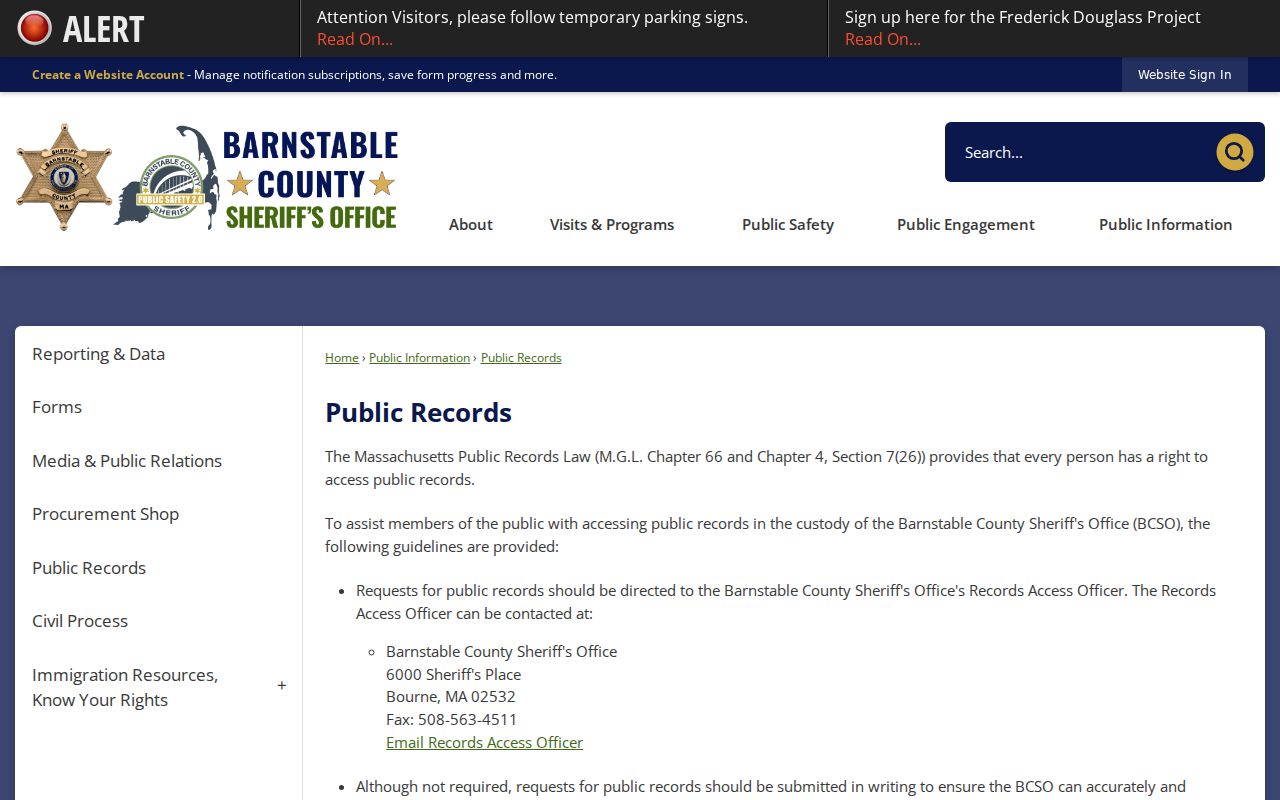
Nothing on the Sheriff's site amounts to a wanted roster for Barnstable County.
Reporting a Tip Safely
Where a tip program exists, use the channel the agency itself publishes. Call 911 in Barnstable County if a situation is unfolding right now.
Key Rules:
Send a tip through the official program page or the agency's published number, never through a social post or a commercial site.
Never approach a person you believe may be wanted, and do not share a home address or a vehicle description publicly.
Ask the agency whether the tip can be anonymous, and ask what information it actually needs.
Barnstable County has no program to call. Ask the issuing court's clerk instead. A defense attorney is the right help for anyone named in a case.
Checking Your Own Barnstable County Warrant Case
Without a roster, a self-check follows the same path as any other warrant question.
- Find the court named on the notice, or match the town to its District Court Division.
- Search the Trial Court's public case access with the exact case, docket, or citation number.
- Call the clerk and ask whether the case shows an active default or warrant.
- Ask what the court requires for default removal and warrant recall.
- Ask for written proof of any recall, and keep it until the agencies confirm their own records.
The Trial Court case access portal is free, but it returns a case record for a Barnstable County matter, not a warrant certificate.
Most Wanted Lists vs Active Warrants
These two sound alike and are not. A most wanted page is publicity; an active warrant in Barnstable County is court process.
| Point | Most wanted list | Active warrant |
|---|---|---|
| Who controls it | The agency running the program | The court that issued the process |
| Scope | A short curated subset | Every open warrant in that court's files |
| Purpose | Public tips and publicity | Authority to arrest and bring a person to court |
| How it ends | The agency removes the entry | A recall, removal, service, or disposition |
Dropping off a published page never clears a warrant in Barnstable County, and a case can sit outstanding while no list mentions it. The outstanding warrants page covers that status in depth.
Barnstable County Warrants and Federal Fugitive Cases
Federal cases run on a separate track from Barnstable County's courts. The county falls inside the U.S. District Court for the District of Massachusetts. There, the U.S. Marshals Service handles fugitive operations, and federal dockets are read through PACER. A docket search is not a wanted list, though. Sealed complaints, sealed indictments, and unserved warrants may not show up in it. An out-of-state hold is not a Barnstable County record either, so a resident facing one should work through counsel or the agency named in the notice.
If You Think You Are on a List
Call a defense attorney before anyone else. Then reach the court or agency that controls the process. Identity theft cases have a stricter rule in Barnstable County: state guidance says the person must appear at the court and request the recall in person. A phone call will not do it.
Important: Do not approach anyone about a wanted entry, and do not try to resolve a criminal warrant by walking into a police station unannounced.
The official recall instructions lay out the clerk-first sequence for a Barnstable County warrant held outside any public list.
Barnstable County Most Wanted News and Updates
A news story about a fugitive sweep is easy to mistake for a live list. It is not one. An older article also tells you nothing about how many warrants remain open today. Barnstable County has posted no 2024 to 2026 warrant roundup, safe-surrender week, or amnesty event on its official pages, so treat any roundup headline from those years with care. If a program does appear later, look past the splash page for the details that matter: the sponsoring agency, which cases qualify, the tip channel, any reward and how it is paid, and the date the page was last refreshed. For now, Barnstable County offers stable contact pages rather than a most wanted roster, and a phone call to the issuing court beats an old report every time.
Barnstable County Warrant Records Without a Roster
A wanted list changes fast, and a court has not confirmed the personal details on it, so copying one here would serve no one. The better move is knowing where each question gets answered in Barnstable County. Three official destinations cover nearly everything. The Sheriff's Office handles agency records and civil process questions. The courthouse locator routes a case to the right Division. That Division's clerk is the one who can speak to warrant status.
Note: Check your own record or help an authorized relative, and leave other people's cases to the agencies that hold them.