
Barnstable County Municipal Court Warrants
The phrase municipal court warrant belongs to states where each city runs its own criminal court. Massachusetts works differently outside Boston. The District Court Department serves the Commonwealth's towns, and Barnstable County's share is three Divisions: Barnstable, Falmouth, and Orleans. No town docket exists. Every town warrant is a District Court warrant. Town police may write the citation. They may even make the arrest, yet the court record and the warrant status stay with the Division that took the case. That one fact fixes where a Barnstable County enquiry starts, and it is worth knowing before you call anyone.
Why Barnstable County Has No Warrant Court
The Boston Municipal Court Department is a separate department of the Massachusetts Trial Court, and it serves only the city of Boston. Barnstable County has no equivalent. Nor does it have justice-of-the-peace courts issuing criminal process. Every town in Barnstable County has a Division instead. Barnstable, Yarmouth, and Sandwich sit in Barnstable District Court. Bourne, Falmouth, and Mashpee sit in Falmouth District Court. The nine Lower and Outer Cape towns belong to Orleans District Court. A records request at a Barnstable County town hall cannot turn up a city court docket, because the town never held one.
Barnstable County Cities With Municipal Courts
None. The table below shows where each of Barnstable County's five largest towns actually sends its criminal and traffic cases.
| Town | Municipal court | Assigned court route | Code |
|---|---|---|---|
| Barnstable | None | Barnstable District Court, (508) 375-6778 | 25 |
| Falmouth | None | Falmouth District Court, (508) 495-1500 | 89 |
| Yarmouth | None | Barnstable District Court, (508) 375-6778 | 25 |
| Sandwich | None | Barnstable District Court, (508) 375-6778 | 25 |
| Mashpee | None | Falmouth District Court, (508) 495-1500 | 89 |
Those population figures come from the 2020 Census, and they mark the five largest municipalities in Barnstable County. None of them runs a court of its own.
Barnstable County Municipal Warrants and the District Court Route
District Court Divisions hear criminal complaints, misdemeanors, motor-vehicle offenses, preliminary felony matters, and civil cases, issuing summonses, default warrants, and arrest warrants within that jurisdiction. So a town case follows a set path. Police investigate and apply for a complaint. The court then issues a summons or process, and the case lands on the docket of the Division covering the town. Miss a date there and a default is entered. The same clerk handles what comes next. What follows in Barnstable County is the same default warrant, kept by the same clerk who holds the docket.
Checking a Municipal Court Warrant
No countywide warrant list covers town cases in Barnstable County. The warrant check runs through the courts and the records channels that do exist.
- Read the citation or complaint for the Division name, the case number, and the charge.
- Search the Trial Court's public case access with the exact case or citation number.
- Call the Division's clerk for live status and for the recall procedure.
- Request the police report from the town department that created it, for the origin record.
- File a records request when the record you need is held by an agency rather than a court.
No Barnstable County town publishes a warrant list. A town police website is not a warrant lookup.
Barnstable County Warrant Routing From Citation
Follow the paper from street to courtroom. That path explains why each Barnstable County office tells you to call someone else.
- A town police officer or a state agency issues a citation or applies for a criminal complaint.
- The case is docketed in the District Court Division that serves that town.
- The court sends a summons or process to the address on the file.
- A missed date produces a default, and the court may issue a warrant.
- The clerk records the warrant and the serving police department in the state system, and any later recall is transmitted the same way.
Each step belongs to a different office. Only the fourth and fifth touch the court's warrant process in Barnstable County.
Inside a Municipal Court Warrant
The record looks like any other District Court process. The town's origin shows in the Barnstable County case history.
| Case Number | The docket number, with the Division code in the middle of the string. |
|---|---|
| Originating Agency | The police department or agency that brought the complaint. |
| Charge | The offense charged, whether criminal, motor vehicle, or another matter within District Court jurisdiction. |
| Issuing Court | The District Court Division that controls the file and any recall. |
| Status | Open, defaulted, recalled, served, or disposed, as the docket events show. |
| Clearance | The court's paperwork showing default removal or a recall. |
Barnstable County Warrant Files vs Police Reports
Town departments in Barnstable County publish records pages, request forms, and daily logs. Those papers describe police work. They carry no warrant status, and the town never holds the court file. Yarmouth's public records guidance states the point directly: court records are not held by the town. Barnstable's police records division handles incident and accident reports. A report request there neither confirms nor clears a court warrant. Use the police for the origin record. Use the Barnstable County court for warrant status. Note: Reports on domestic violence, harassment, or active investigations may be restricted or redacted before release.
How to Resolve a Municipal Court Warrant
The remedy runs through the courtroom, and the clerk starts it.
- Identify the Division from the notice or from the court code inside the case number.
- Call the clerk and ask whether the process is a default warrant or an arrest warrant, and whether it is active.
- Ask what the court requires, and speak with a Massachusetts attorney before appearing.
- Appear as directed and request default removal and warrant recall.
- Ask for written proof of the recall, and ask whether police and the Registry were notified.
Careful: Procedures vary by Division, and a general warrant may require an appearance before a judge, so call before you travel.
Barnstable County Civil Capias Is Not a Municipal Warrant
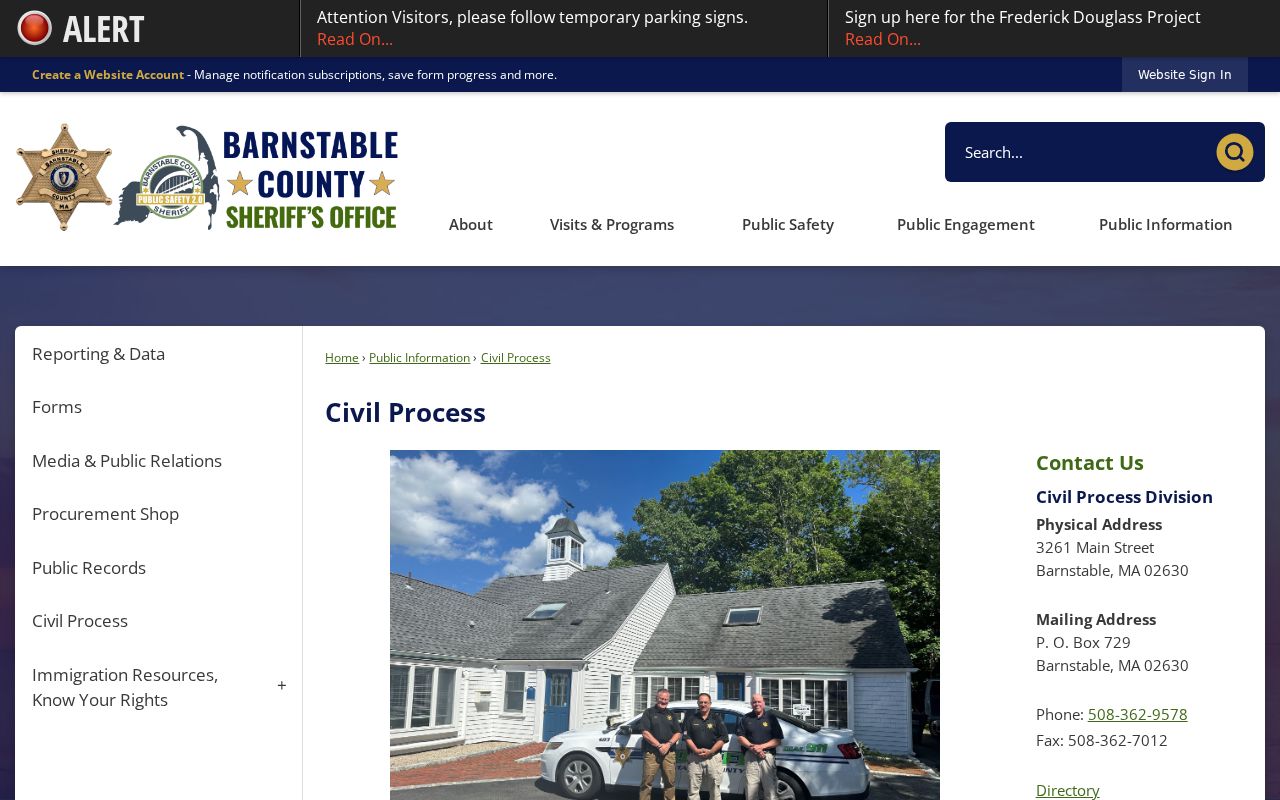
The Sheriff's Office publishes one warrant-specific program. It is civil. The Barnstable County office's Civil Process Division serves a capias after a civil court enters a money judgment that went unpaid. A deputy first tries to arrange a voluntary appearance at the appropriate court. If the plaintiff wants a physical arrest, the plaintiff supplies the original capias and pays a $300 retainer. Deputies also hold published capias windows. Barnstable Probate has one. So does Barnstable District on Thursdays at 10:00 a.m. and Falmouth District on Thursdays at 2:00 p.m. Orleans District holds its window on the last Thursday of the month at 1:30 p.m. None of that is a criminal municipal warrant. It is not an amnesty program either, and the Sheriff's Civil Process page sets out the capias procedure and the published voluntary surrender windows for Barnstable County.
The state court glossary separates a capias from an arrest warrant.
Barnstable County Law Library and Court Research
Inside the Barnstable County courthouse complex at 3195 Main Street, on the second floor, the public law library gives anyone a place to read the actual rules. Admission is free. So are the databases and the Wi-Fi. If a warrant, a default, or a question about public access is on your mind, this is where the governing text lives. A Barnstable County librarian can point you to the right statute or court rule quickly. What the librarian cannot do is recall the warrant. Staff give no legal advice. For that, a lawyer reads the rule and tells you what it means, while a District Court Division lists the courthouse locations serving the rest of Barnstable County.